Facts about women with Diabetes
Diabetes is one of the fastest-growing health concerns globally—and women face unique risks and challenges throughout their lives. From hormonal changes and pregnancy to social and healthcare barriers, the impact of diabetes on women requires focused attention, especially in South Africa.
In this article, we explore important facts about women and diabetes worldwide, while bringing the conversation closer to home for women in Cape Town and across South Africa.
🌍Global Snapshot: Women and Diabetes
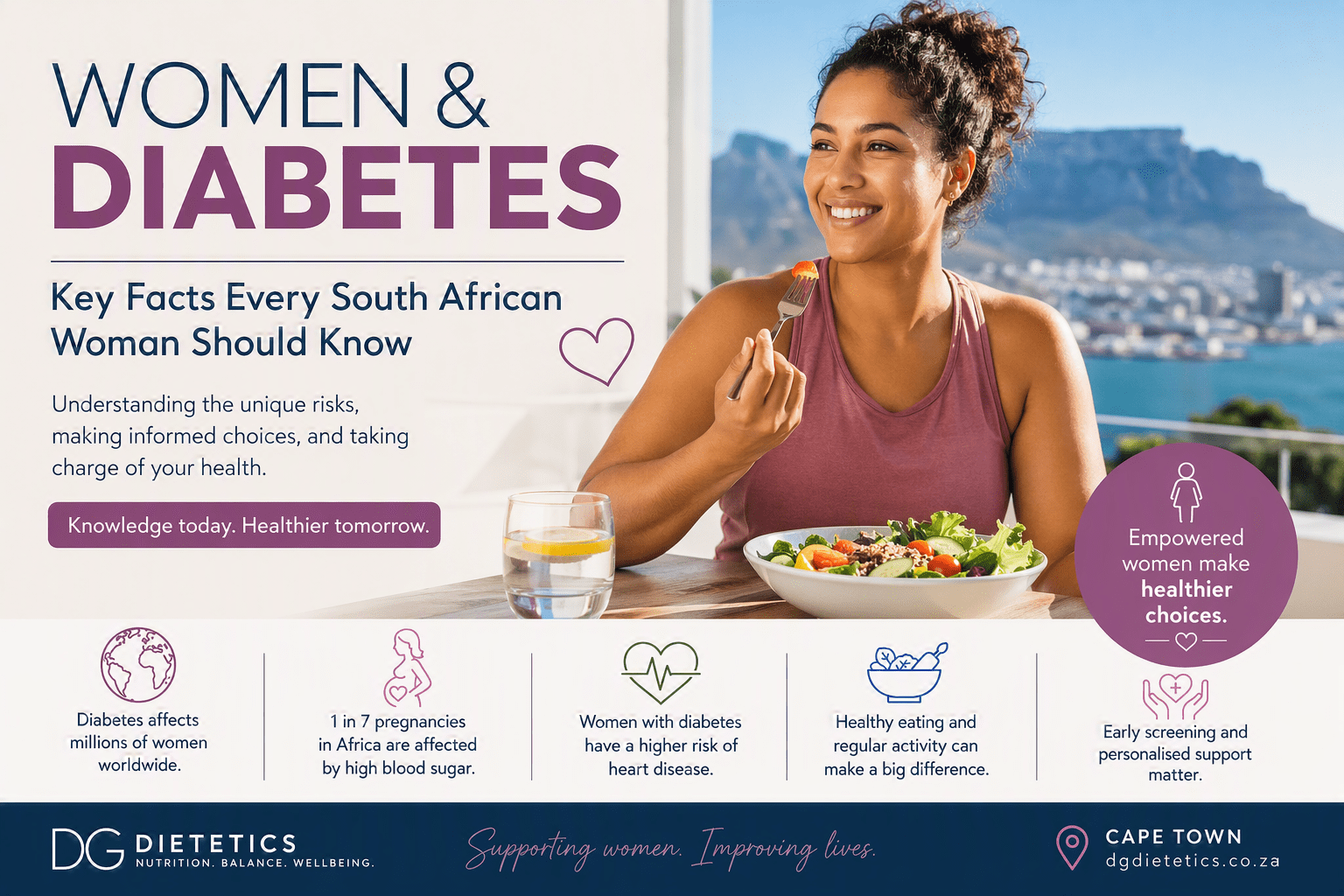
- Around 589 million adults worldwide are living with diabetes, with numbers expected to rise significantly by 2050
- Diabetes affects 1 in 9 adults globally
- While prevalence can differ slightly by sex, women experience unique risks and complications, particularly related to reproductive health
- Diabetes contributes to millions of deaths each year globally, highlighting its serious health impact
Research also shows that diabetes in women is sometimes under-recognised due to disparities in healthcare access and awareness.
Africa & South Africa: A Growing Concern
Closer to home, the diabetes burden is increasing rapidly:
– In Africa, about 25 million adults are living with diabetes, projected to reach nearly 60 million by 2050
– Up to 73% of adults with diabetes in Africa are undiagnosed
– In South Africa, around 2.3 million adults currently have diabete
– The national prevalence is about 7.2% of adults, with higher rates often seen in urban areas
For women in Cape Town, urban lifestyles, stress, and dietary shifts can increase the risk further.
Why Diabetes Affects Women Differently
01
Pregnancy and Gestational Diabetes
In Africa, 1 in 7 pregnancies is affected by high blood glucose.
This increases future diabetes risk for both mother and child.
02
Hormonal Changes
Life stages like puberty, pregnancy, and menopause can affect insulin sensitivity and blood sugar control.
03
Increased Heart Disease Risk
Women with diabetes have a higher relative risk of cardiovascular complications compared to men with diabetes.
04
Social Factors
Many women juggle caregiving, work, and family responsibilities—often placing their own health last.
Living Well with Diabetes in Cape Town
Cape Town offers many ways to support a healthier lifestyle:
3 Step Process:
Eat Smart, Locally
A well-balanced, nutritious diet, which includes healthy, high fibre carbohydrates is effective in managing blood sugars.
Stay Active
Use local environments—beaches, parks, and hiking trails—to stay active.
Aim for regular weekly movement.
Prioritise Health Checks
Screen regularly if at risk
Test during and after pregnancy
Seek personalised support from a registered dietitian
Final Thoughts
Diabetes affects millions of women world wide and its impact is growing in South Africa. But with the right knowledge and support, it can be managed effectively.

Women in Cape Town can take control by:

- Understanding their individual risk
- Making informed nutrition choices
- Seeking professional guidance early

At DG Dietetics, we are committed to helping women take charge of their health through practical, evidence-based nutrition advice.
Get in touch if you would like support with your diabetes.
Recent Posts
Sign up to get our latest news
[forminator_form id=”2980″]
Contact Us
-
Phone
-
Email
-
Location
South Peninsula & Southern Suburbs, Cape Town